Bianzan: the writing of thought
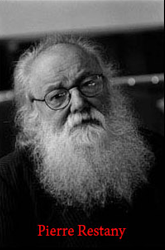
Pierre Restany
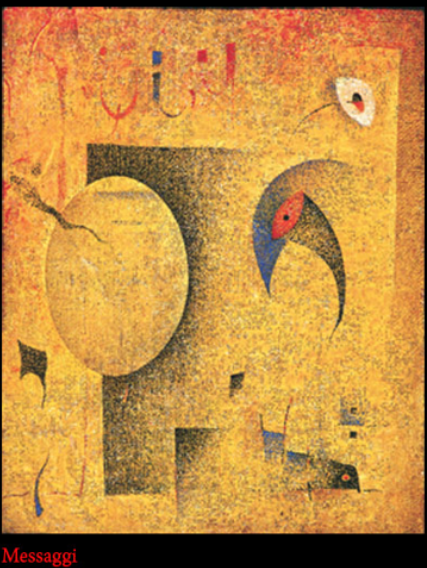
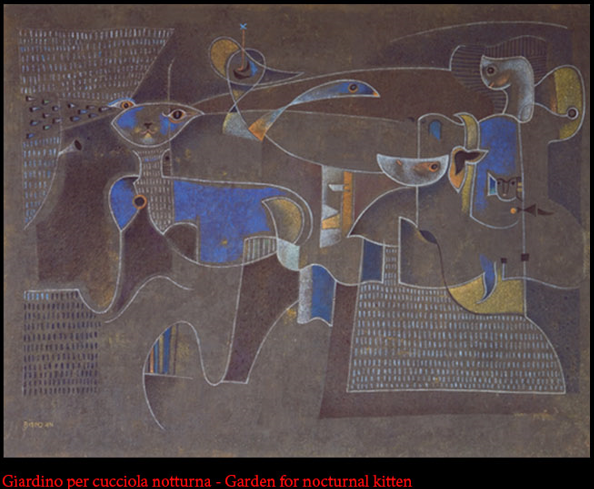
Bianzan’s work cannot be approached according to traditional criteria of aesthetic judgement: that would be the most definitive nonsense. The artist warns us against interpretations that are too superficial or argumentations of convenience. This work draws its inspiration from the deepest roots of memory and environment: family, place and the rhythm of a permanent paradox; it feeds on the same substance of which the reality it rejects is made. Sublimation for Bianzan is a tangible phenomenon, centered on the immediate consciousness of the being. The artist tells us how much her family members and places helped to create everyday fantasy of her childhood: her great-grandfather an archeologist and historian in Carnia and his cousin a geologist and explorer in Africa… The Friulian land, set on the border between the Slavic, Germanic and Latin worlds; a land of passages, invasions, exoduses and mighty natural phenomena. Earthquakes complete the vandalism of the invading hordes. At any price one must transcend this violence and, in the 1950s-60s, the young Bianzan will find a basis of spiritual peace in the incessant reading.
Initially it will be Dante, Florence and the Renaissance, then the America of Alan Poe, but also Faulkner and Kerouac, the fascination of Russian literature and the digital emergence, Klee, Kandisky that will transport Bianzan into the kaleidoscope of an enchanted world.on the edge of aberration which is that daily anguish of existence that Samuel Beckett brought to paroxysm. Then travels follow travels, but the young artist, in the attempt to understand the bonds that unite the being to the cosmos and to nature, fixes the center her wandering in the land of her birth. A land of forests and mountains, this one extending to Austria and Yugoslavia, to Vienna and Munich.For her avid spirit the nature of things intimately mingles with the nature of men,ions in the land of his birth. Land of forests and mountains, this one extending into Austria and Yugoslavia, into Vienna and Munich. For the the fauna and flora with the verses of Goethe and Rilke.